How We Find and Study Exoplanets
Exoplanets are planets that orbit stars outside of our solar system. Since the first confirmed discovery in 1995, astronomers have developed several methods to find and study these distant worlds. Many exoplanets have been found using different techniques, revealing that small planets are quite common in our galaxy.
Key Discovery Methods
Radial Velocity: Reading the Wobble
This method measures the gravitational tug that a planet exerts on its star, causing the star to wobble. The change in the star's light, or "radial velocity," is tracked to infer the presence of a planet. It was used to discover 51 Pegasi b, the first exoplanet around a Sun-like star in 1995.
Transits: Planets Found in Dips in Light
When a planet passes in front of its star, it causes a small dip in the star’s brightness. The Kepler Space Telescope revolutionized planet hunting with this method, observing the dimming of stars as planets transit them.
Transit Spectroscopy: Reading the Light
By capturing starlight as it passes through a planet’s atmosphere during transit, scientists can study the atmospheric composition. The James Webb Space Telescope is expected to provide new insights using this technique.
Gravitational Microlensing
This method uses the gravitational field of a star to bend and magnify light from a background object. If a planet is orbiting the star, it creates a temporary brightness spike, revealing the planet’s existence.
The Rise of Direct Imaging
Direct imaging involves taking pictures of exoplanets by blocking out the overwhelming glare of their host stars. Although challenging, this method provides direct visuals and atmospheric profiles of planets.
Coronagraph
A coronagraph is an instrument that blocks the light of a star to directly view planets around it. It’s a promising technology for future space telescopes, such as the Nancy Grace Roman Space Telescope.
Starshade
A starshade is a sunflower-shaped spacecraft that blocks starlight before it reaches a telescope, allowing for the detection of planets. It’s a concept being developed for future missions.
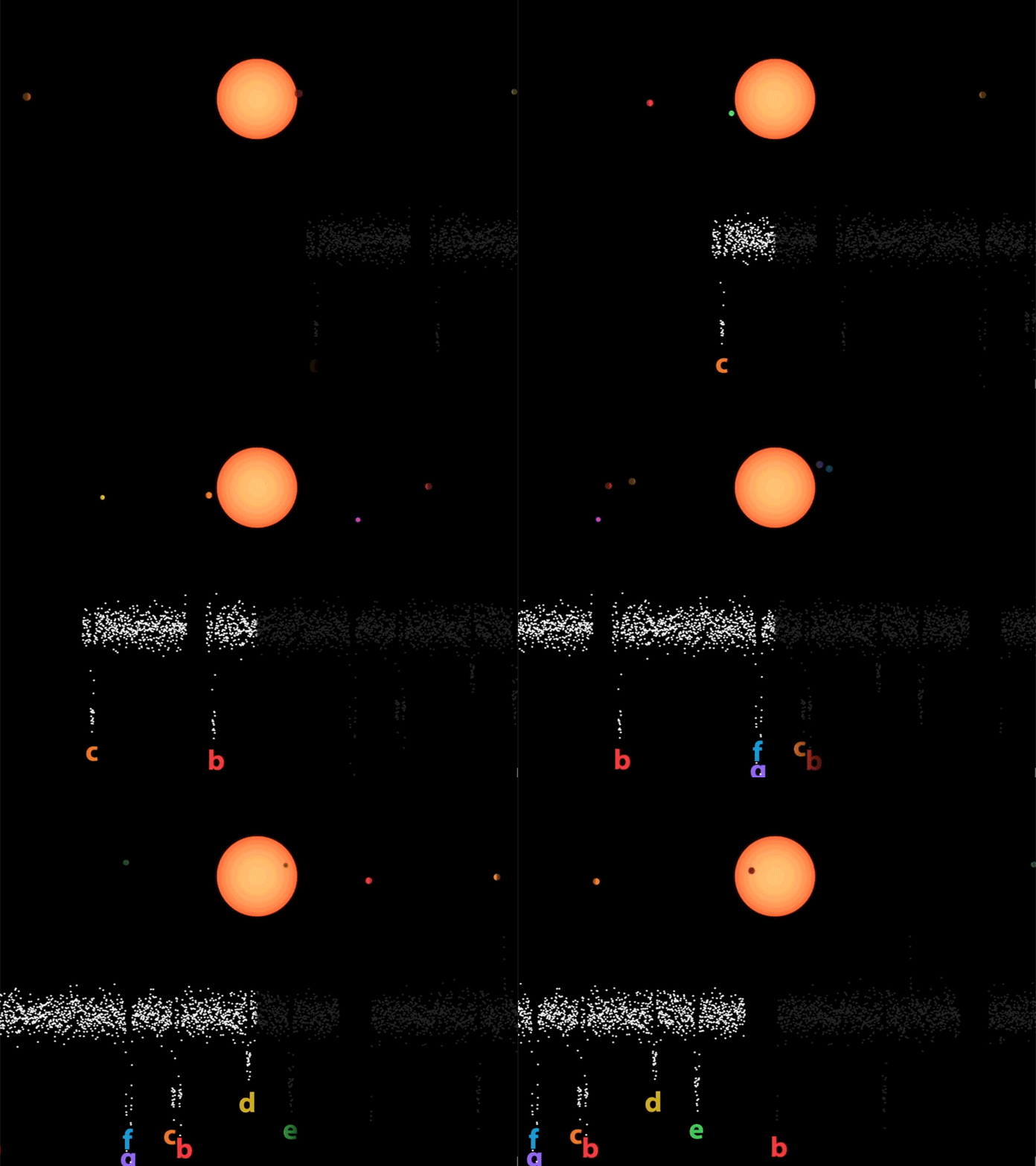
A Galaxy Full of Planets
According to data from the Kepler Space Telescope, there are more planets than stars in our galaxy—over a trillion planets. Many of these planets are similar in size to Earth. As MIT professor Sara Seager said, “They’re everywhere.”
Future of Exoplanet Research
- Upcoming missions like the James Webb Space Telescope will help scientists explore the atmospheres of distant planets and look for signs of life.
- Techniques like transit spectroscopy and direct imaging will continue to play a major role in characterizing exoplanets.